Overview
This section covers best practices for adding alt text and ensuring the accessibility of images in Word documents.
Alt text stands for Alternative text. It serves three purposes:
- Enables screen readers to convey image meaning to users with visual impairments.
- Displays in place of an image if it fails to load.
- Helps users understand content.
Word Template
Take the guesswork out of whether your headings are accessible or not. Use the template below with Heading styles, which are already digitally accessible.
Download this accessible Word template. Please use the tools available in Word to create consistent and digitally accessible materials.
Does My Image Need Alt Text?
To decide if an image needs alt text, ask yourself:
- If I removed this image, what text would I add instead?
- What is the purpose or function of this image?
If the image serves no purpose or wouldn’t change the meaning of the document if removed, mark it as decorative.
Click the button to learn how to write alt text.
Add Alt Text in Word
Images that convey content or function need alt text so screen readers can describe them to users with visual impairments.
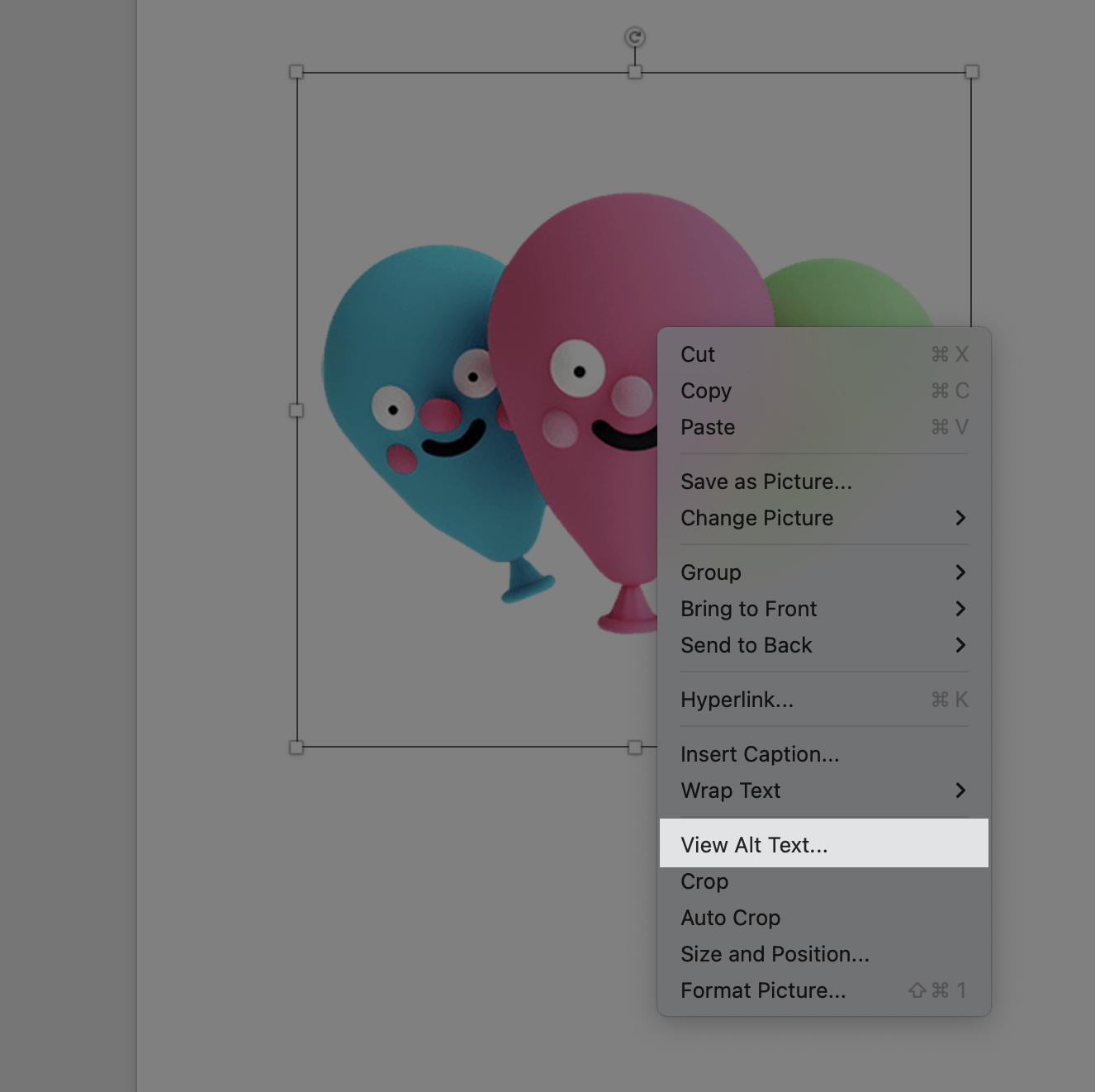
For a Mac
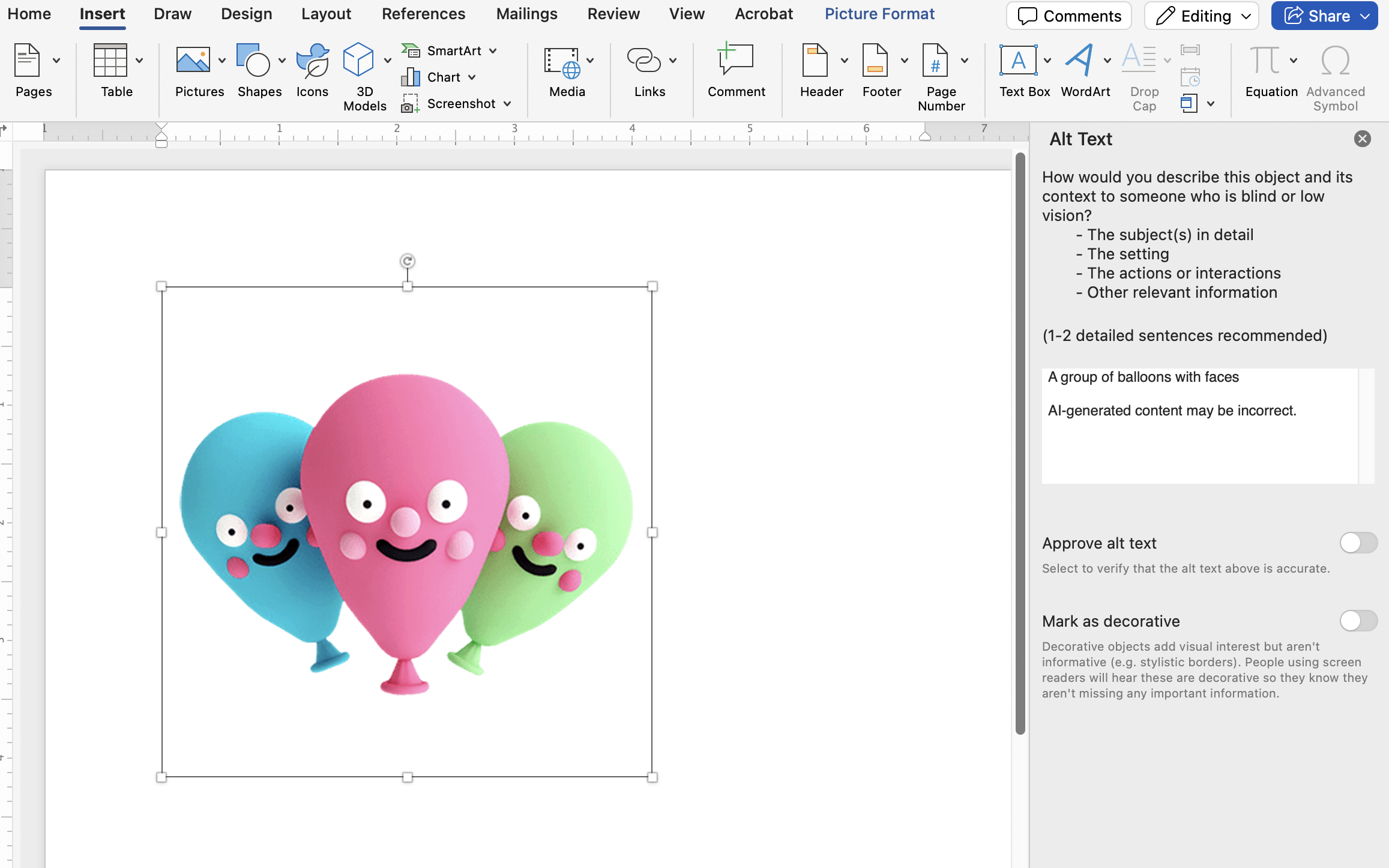
- A window will appear on the right side of your Word document.
- Either write a brief description of what the image shows or toggle the Mark as decorative button. (Marking an image as decorative tells screen readers to skip it, ensuring users know they aren’t missing important content.)
- Then, toggle the Approve alt text button to remove the statement AI-generated content may be incorrect.
In some instances, Word may auto-generate suggested alt text. Always read the text first to ensure it is correct, clear, and describes the image accurately. This is particularly important for medical images.
Mark the image as decorative
If your image is purely decorative and the meaning of the document doesn't change without it, mark it as decorative.
Write alt text
Add a brief description of what the image shows. Refer to How to Write Alt Text, if you need help.
When you have completed writing your alt text, toggle the Approve Alt Text button.
For Windows
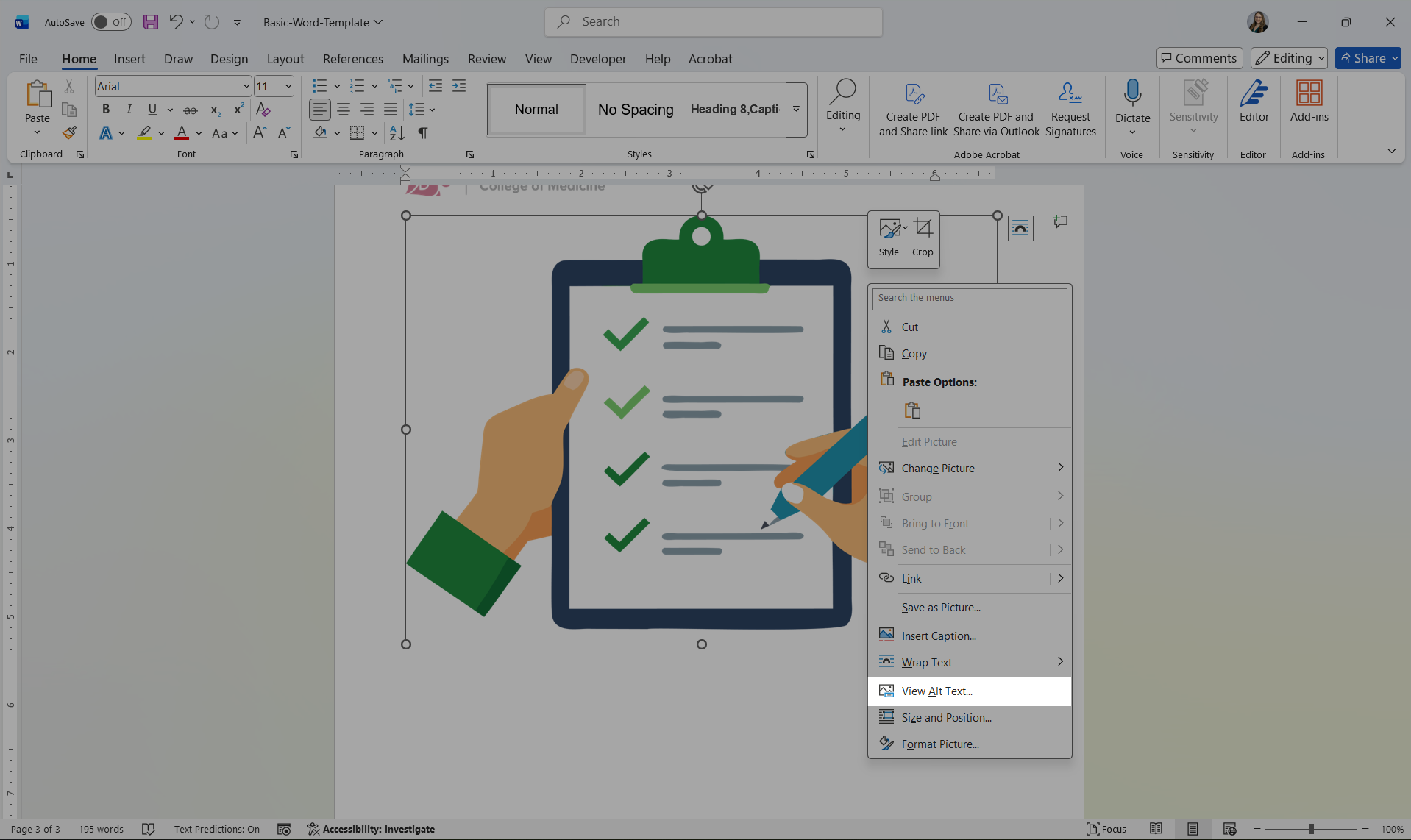
- Right click on the image and a popup menu will appear.
- Select Edit Alt Text. need this image, not just the menu, but what does it look like on the screen.
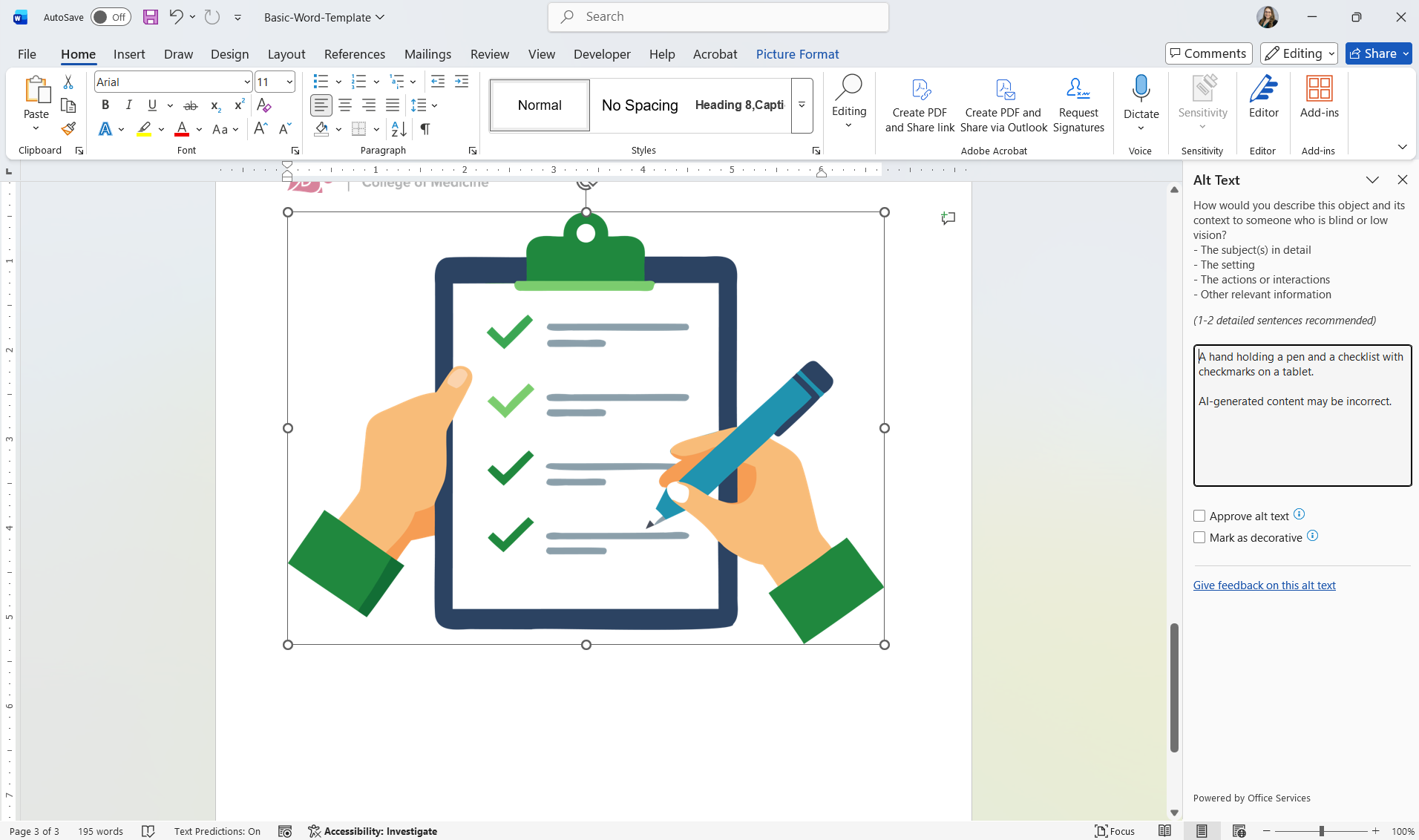
Need instructions after Edit Alt Text is selected and an image of what the PC screen looks like to add alt text. See Mac instructions. These should be similar.
If your image is purely decorative and the meaning of the document doesn't change without it, mark it as decorative.
When you have completed writing your alt text, toggle the Approve Alt Text button.
Best Practices
- Keep the alternative text short (less than 150 characters) and use proper punctuation.
- Adjust alternative text so it is meaningful within the context of the content the image is used with.
- Use visible text such as a caption for information meant for everyone, e.g., image copyright/attribution.
- Do not begin the alternative text with phrases such as image of, photo of, or graphic of as assistive technology automatically announces images.
- Do not repeat information that is already provided in nearby text.
- Do not use Square or Tight, or the image will be skipped by screen readers.
Resources
- How to use the Word accessibility checker.
- How to write alt text for images.
- WebAIM: Accessible Images
- WebAIM: Alternative Text
- W3C WAI: Image Tutorial
Need assistance?
Contact the Digital Accessibility Team if you have questions, need one-on-one support, or need additional training.
Contact the Digital Accessibility Team