
Lists in Word

Table of Contents

5-min read

Overview

Lists convey and create relationships between items. These relationships are displayed visually and in the underlying code, which assistive technologies use to read.

Word Template

Take the guesswork out of whether your lists are accessible or not. Use the template below with list styles that are already digitally accessible.

Download

Download this accessible Word template. Please use the Tools available in Word to create consistent and digitally accessible materials. Follow the best practices shown in the video below.

Types of Lists

There are two main types of lists:

  1. Unordered (bulleted).
  2. Ordered (numbered or lettered).

To choose between bullets and numbering, ask yourself: Would changing the order of these items affect the meaning?
If yes, use Numbering (Ordered lists).
If no, use Bullets (Unordered lists).

Use Lists in Word

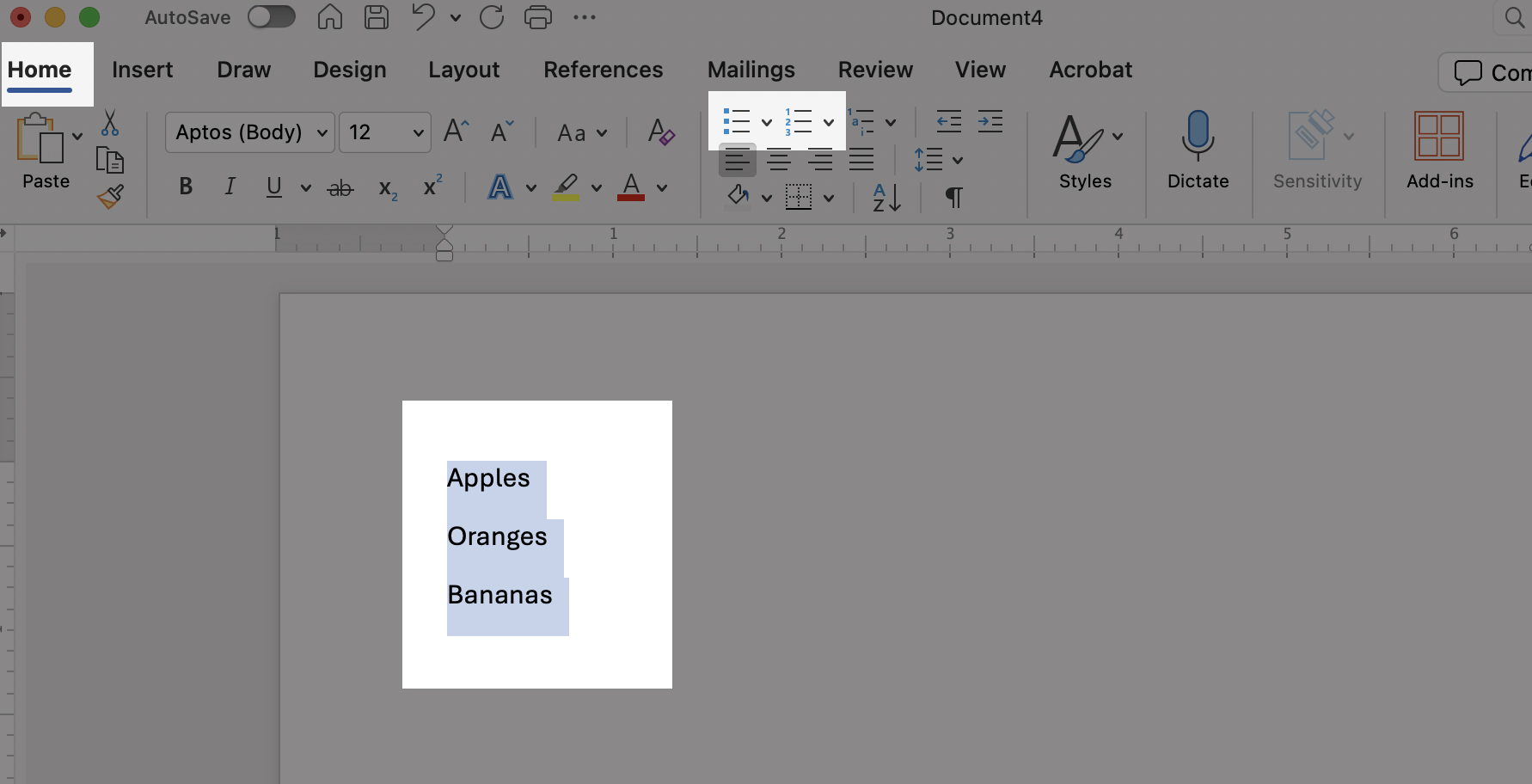
shows Home tab, Numbered list, and Bulleted list button. List is highlighted
Tap to enlarge.
  1. Type your list items, including any sublists. Then, highlight your list items. On the Home tab, select Bullets or Numbering to apply the list type.
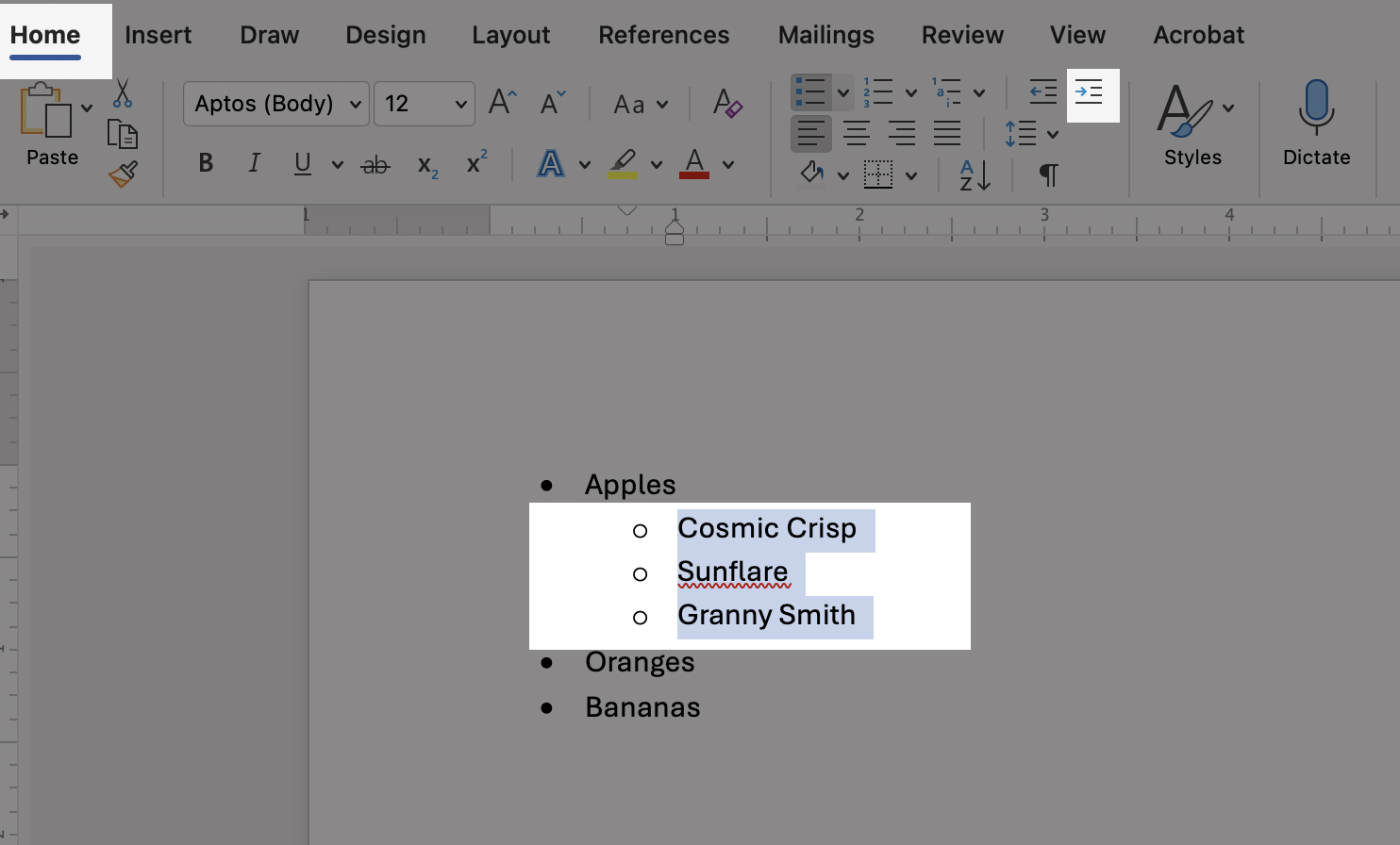
Shows the home tab, indent button, and highlighted list to be indented.
Tap to enlarge.
  1. To create a Sublist, highlight the items and select the Increase Indent button on the Home tab
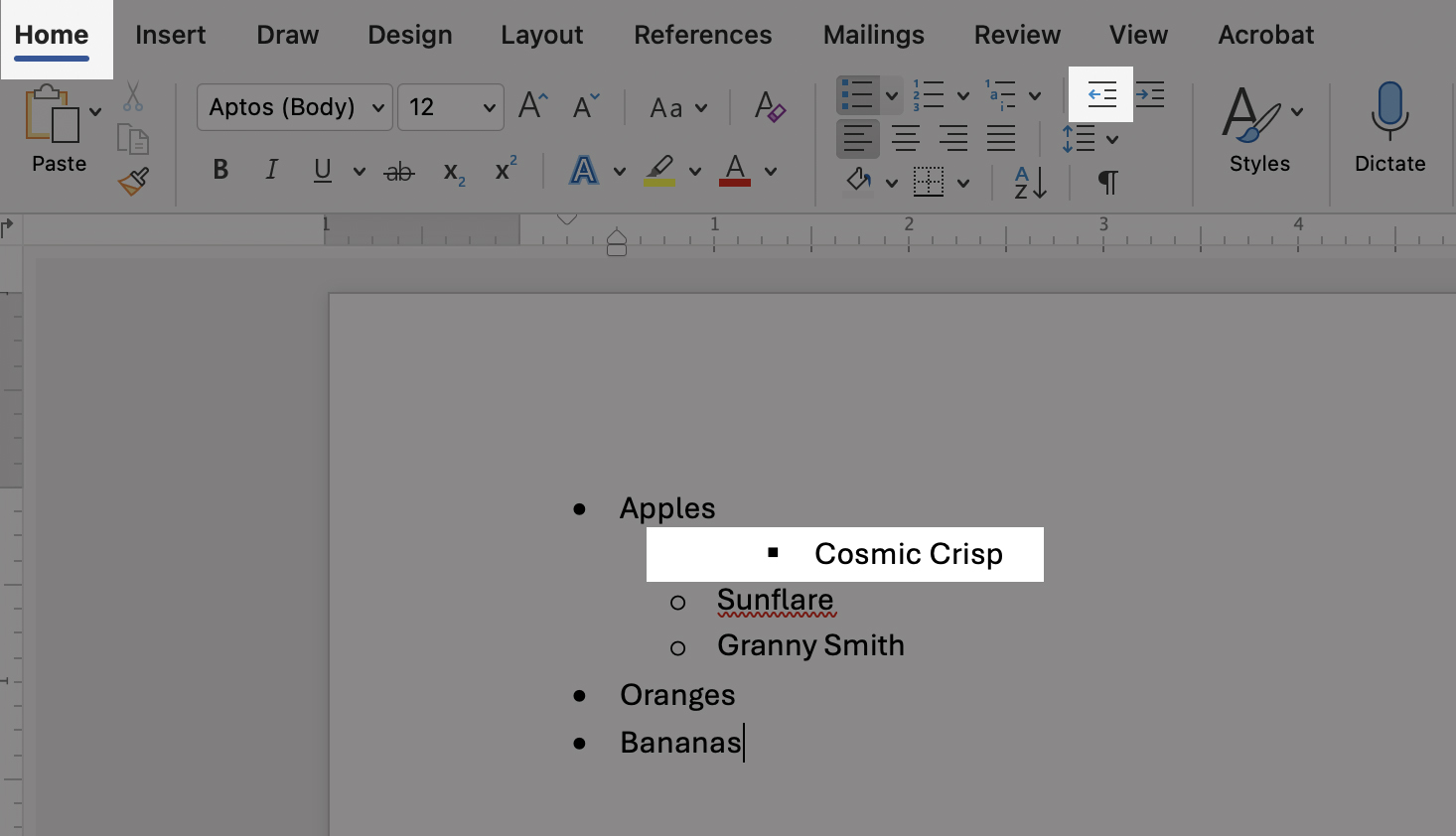
Shows the Home tab, Decrease Indent tab, and list item that needs to decrease the indent.
Tap to enlarge.
  1. If you indent too far, or indent an item inadvertently, use the Decrease Indent button to move the list item to the right place.  
  2. Press Enter to add new list items or Delete/Backspace to remove a list item.

Best Practices

These changes affect appearance, not structure. Screen readers don’t recognize them as lists. Use Word’s built-in tools to create your lists. 

FAQ

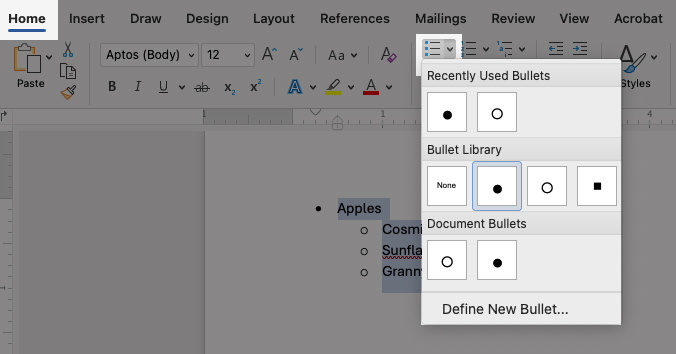
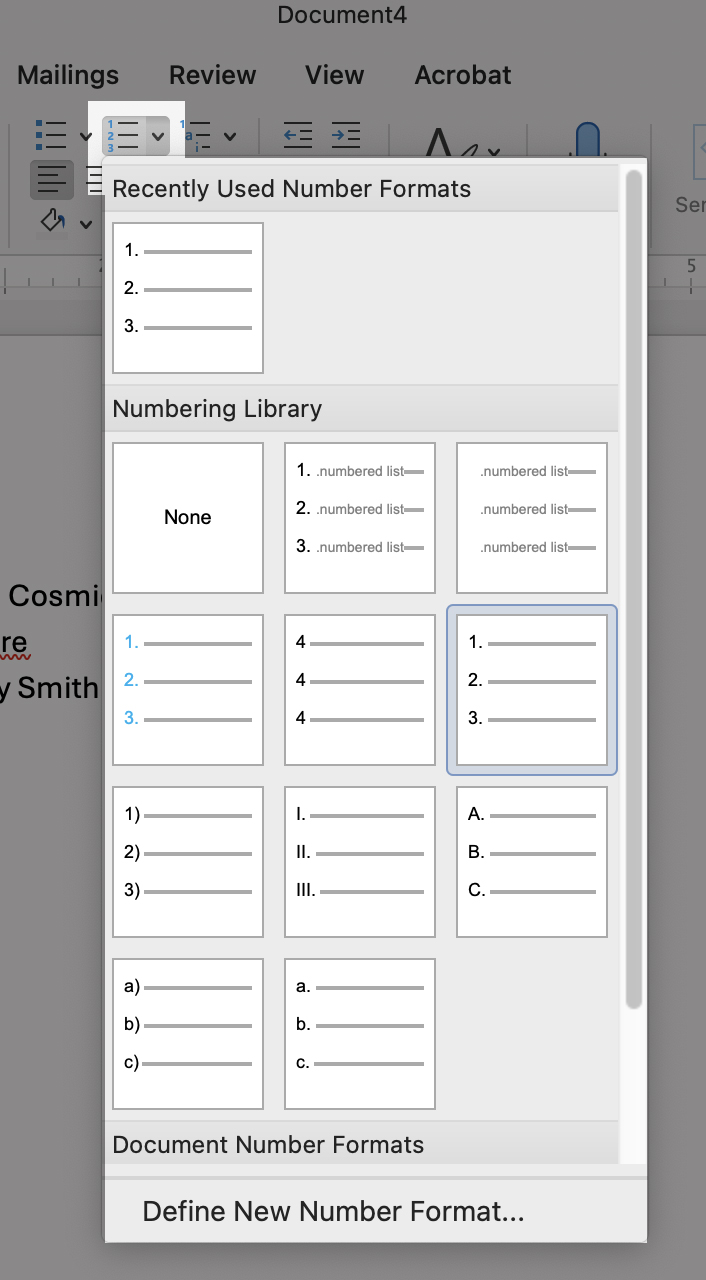
Shows the dropdown menu for numbered lists, so you can change the List's style.To change a Numbered list style, use the Dropdown menu next to the Numbered lists icon. A popup menu shows different options for a Numbered list, including letters. This also includes options for adjusting the style for each level of a multi-level lists. 
 

Manually typed bullets and numbers are not recognized as lists by screen readers, so users lose the important structure in your document. 

Screen readers announce that a list is present, how many items are in the list, and each item’s position in the list.

The short answer: Sort of! You will still need to check the formatting because it can be lost or not be accessible. Always check that the pasted content is a true list and always run the Accessibility Checker in Word.

Yes, if the list was created using Word’s built-in List tools. Manual indentation (using the Tab key or Space bar) is not accessible.

Yes, if the list was created using Word’s built-in List tools. Manual indentation (using the Tab key or Space bar) does not create an accessible list.

Need assistance?

Contact the Digital Accessibility Team if you have questions, need one-on-one support, or need additional training.

Contact the Digital Accessibility Team

Keep Learning